

Service
Electrical panel upgrades
Replacing an undersized or obsolete service so the rest of the house can be wired safely.
Most of the time an electrical panel upgrade is not really about the panel. It is about everything the panel is stopping you from doing.
A 60 amp service was adequate when a house had lights, a stove and a fridge. It is not adequate for a heat pump, an EV charger, a hot tub, a basement suite or a modern kitchen. When you are told a circuit cannot be added, the panel is usually the reason.
When an electrical panel upgrade comes up
The three most common ways this lands on our desk:
Insurance. Insurers ask about fuse panels, 60 amp services and certain older equipment. Some decline, some surcharge, some want a letter before they will renew.
A renovation that has stalled. A kitchen, an addition or a finished basement adds circuits, and at some point the existing service simply runs out of capacity.
Something new that draws real current. Heat pumps and EV chargers are the two that most often trigger a service upgrade in this region, because both need a genuine load calculation rather than a guess.
What the work involves
A service change means a new panel, usually a new meter base and mast, new grounding and bonding brought to current code, and every existing circuit transferred over and labelled properly.
We do a load calculation before any of it. That is not a formality: it is the step that decides what size of service the house actually needs, and it is based on what the house is about to have in it rather than what is in it today.
The panel directory
Every panel we install leaves with a legible, accurate circuit directory. It costs us fifteen minutes and it saves whoever works on the house next, which might be us and might not be.
Often the panel is the first step rather than the whole job. A service upgrade is frequently what makes EV charger installation or heat pump circuits possible, and it usually runs alongside knob-and-tube replacement in an older house.
What happens on the day of an electrical panel upgrade
The power comes off at the meter, so Nova Scotia Power is part of the schedule rather than an afterthought. That is what makes this booked work instead of something done on the spot, and it is why the inspection is arranged around the disconnection rather than chased afterwards.
A residential service change is usually a single day, with the power off for a stretch in the middle of it while the swap and the reconnection happen. You get that window before the work starts. If the house has electric heat or a tenant, say so early, because it changes which day of the week we want.
What decides the size of the job
Five things, and none of them are visible from the driveway.
The service size you are going to. A hundred amps is enough for a lot of houses. It is not enough for a house that is also getting a heat pump, an EV charger and a hot tub, and doing it twice costs more than doing it once.
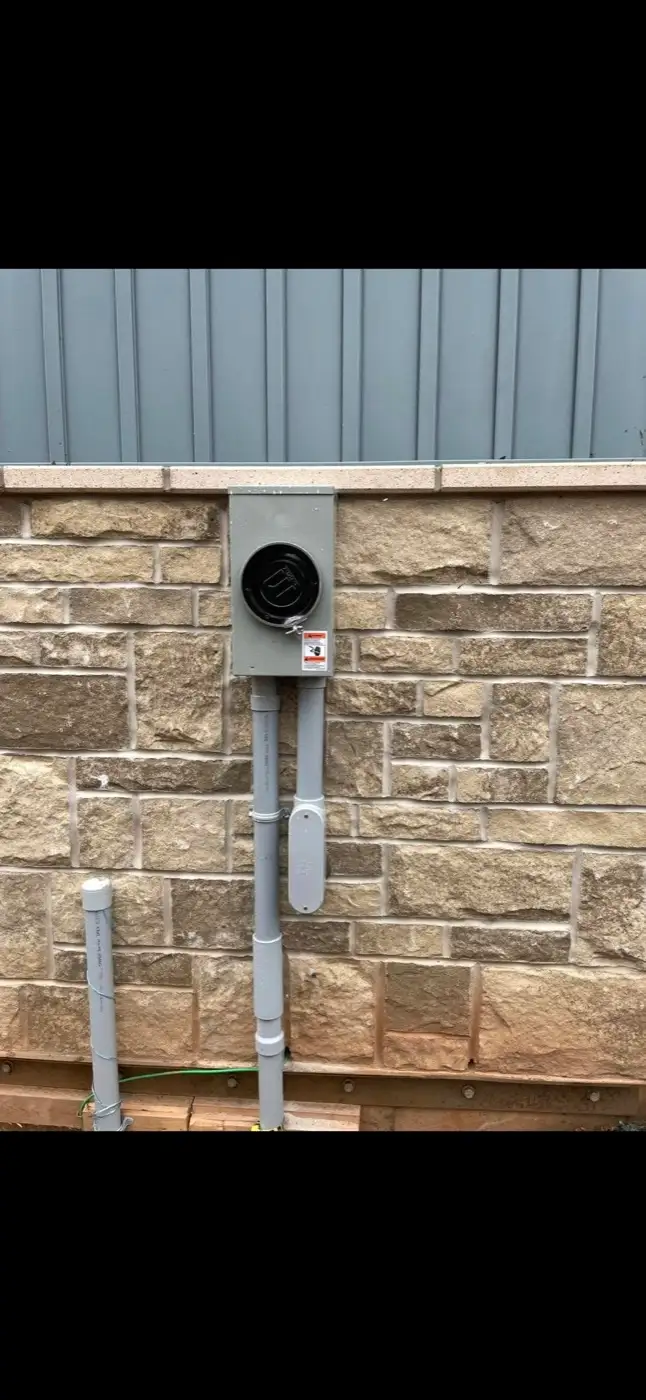
The mast and the meter base. If the existing mast is sound the job is shorter. If it is corroded, undersized or in the wrong place, it is a bigger piece of work than the panel itself.
Where the panel lives. A panel in an open basement is straightforward. A panel in a finished closet with a wall in front of the feeder is not.
What the circuits are made of. Old cable that will not reach the new panel position has to be extended in a proper junction, and knob and tube or aluminum branch circuits change the conversation entirely.
What the inspection turns up. Occasionally the panel is the least of it.
We do not quote an electrical panel upgrade over the phone, and anyone who does is guessing about at least three of those five.
The permit is not optional
Service and panel work is permitted, inspected work in this province, and in Nova Scotia only a certified electrician can pull the permit at all. How that runs, who inspects and when, is set out on the electrical permits and inspections page. Worth reading if you are comparing quotes, because a quote that leaves the permit out is not the same job.
Fuse panels, and the 60 amp service
The two things insurers ask about most in this region. A fuse panel is not automatically dangerous, and plenty of them are still doing their job, but the combination of a fuse panel and a 60 amp service in a house that has since gained a dryer, a heat pump and a home office is where the trouble starts.
If a broker or a home inspector has put something in writing, send it to us. The wording matters, and the letter they need is easier to produce during the job than six months later.
You can see finished electrical panel upgrade work, masts and meter bases in the recent work gallery.
What will this cost?
Nobody can price this down the phone, and anyone who does is guessing. What you can find out now is what will decide the number on your house.
Common questions
How do I know if my panel needs upgrading?
The common signs are a fuse panel rather than breakers, a 60 amp service, breakers that trip when two large appliances run together, no space left for a new circuit, or an insurer or home inspector asking about it in writing. Any one of those is worth a look.
Do I need a permit for a panel upgrade?
Yes. Service and panel work is permitted and inspected electrical work in Nova Scotia, and the utility has to be involved to disconnect and reconnect the service. We handle the permit and coordinate the inspection as part of the job.
How long will my power be off?
Most residential service changes are a one day job with the power off for part of it. We will tell you the expected window before we start rather than after.
More on panel upgrades
What a 60 amp service actually stops you doing
A 60 amp service was plenty for a house with lights, a stove and a fridge. Here is how to tell if you have one, and what it rules out in a Halifax home today.
Aluminum wiring and insurance in Nova Scotia homes
Aluminum wiring insurance questions catch 1970s homeowners off guard. What insurers actually ask, why the risk is at the connections, and the real fix.
What decides a panel upgrade cost in Nova Scotia
Panel upgrade cost in Nova Scotia runs on five things: service size, the mast and meter, the panel itself, access, and what the inspection turns up.
Why your breaker keeps tripping, and when it matters
A breaker keeps tripping for one of four reasons: too much on the circuit, a short, a ground fault, or a failing breaker. How to tell which one you have.